




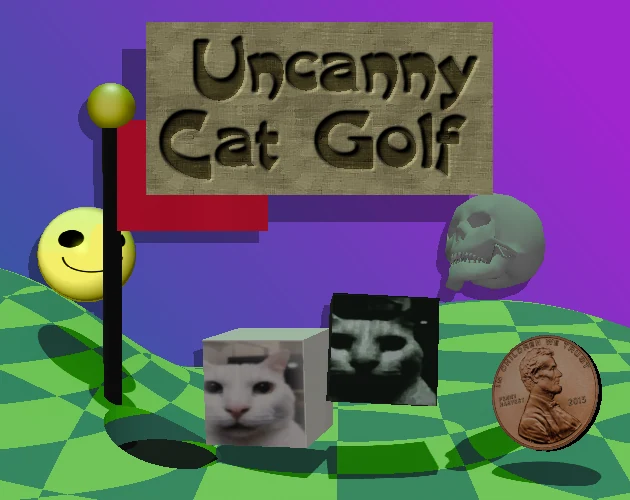
Browser Horror Game

Play Uncanny Cat Golf Online

a playful browser mini-golf game where a square cat replaces the ball and increasingly strange courses hide careful geometry under collage humor

Uncanny Cat Golf

About Uncanny Cat Golf

Surreal Mini Golf browser guide

Uncanny Cat Golf is a playful browser mini-golf game where a square cat replaces the ball and increasingly strange courses hide careful geometry under collage humor. This The False Sun edition reads the fairway as an unreliable image: uncanny faces and collage humor compete for attention while a precise route remains hidden underneath. The browser frame above provides immediate play, and the guide below explains how angle, force, banks, hazards, stopping position, and par turn the apparent chaos into a learnable sport puzzle.

Begin by finding the flag, tracing the physical boundaries, and choosing one safe intermediate target. The main challenge is reading the lane, setting angle and force, planning bank shots, avoiding sand and water, and building a reliable approach to the cup. Let the first round remain imperfect because its extra strokes show where visual distraction, excess force, or an ambitious angle created recovery work.

It contains uncanny faces, flashing meme-style images, and deliberately chaotic humor, but the supplied public artwork is non-graphic. Use fullscreen for a clearer course view, landscape mode on mobile, and comfortable sound. Step away if flashing or uncanny imagery becomes tiring; patient observation is more useful than forcing another attempt while attention is strained.

Uncanny Cat Golf the flag beneath the false image screenshot

The Flag Beneath the False Image

Uncanny Cat Golf uses bright top-down fairways filled with narrow walls, moving props, smiling hazards, computer imagery, water, sand, and meme-like visual interruptions to explore separating the playable lane from uncanny faces, collage props, and visual distractions. Its square cat and impossible collage make the round look unstable, yet the surfaces that control movement remain readable. Direction, force, momentum, contact, and final position still explain every stroke. A player who identifies the cup, walls, hazards, and open ground before studying the joke can create order without flattening the game's uncanny personality. The fairway becomes a diagram hidden inside an image that would rather be treated as a distraction.

The practical challenge is reading the lane, setting angle and force, planning bank shots, avoiding sand and water, and building a reliable approach to the cup. Before shooting, choose a destination large enough to forgive a small error and useful enough to support the next attempt. Maximum power is rarely the default answer because speed makes tiny aiming mistakes travel farther. The loudest visual joke can distract from the safest line, while excessive power turns simple holes into long recovery sequences. A controlled setup stroke can therefore be more efficient than a dramatic shortcut, especially when water, sand, or a hard corner turns one miss into several recovery shots.

For replay, revisit one high-stroke hole and change only the opening angle or power level before comparing the result while preserving every part of the route that already worked. Compare the intended and actual stopping positions, then classify the difference as angle, power, rebound, obstacle contact, or poor target choice. Par becomes a trail of evidence rather than a verdict. This False Sun treatment focuses on deceptive appearances: the loudest object is not always mechanically important, and the safest line often becomes visible only after attention stops following the brightest interruption.
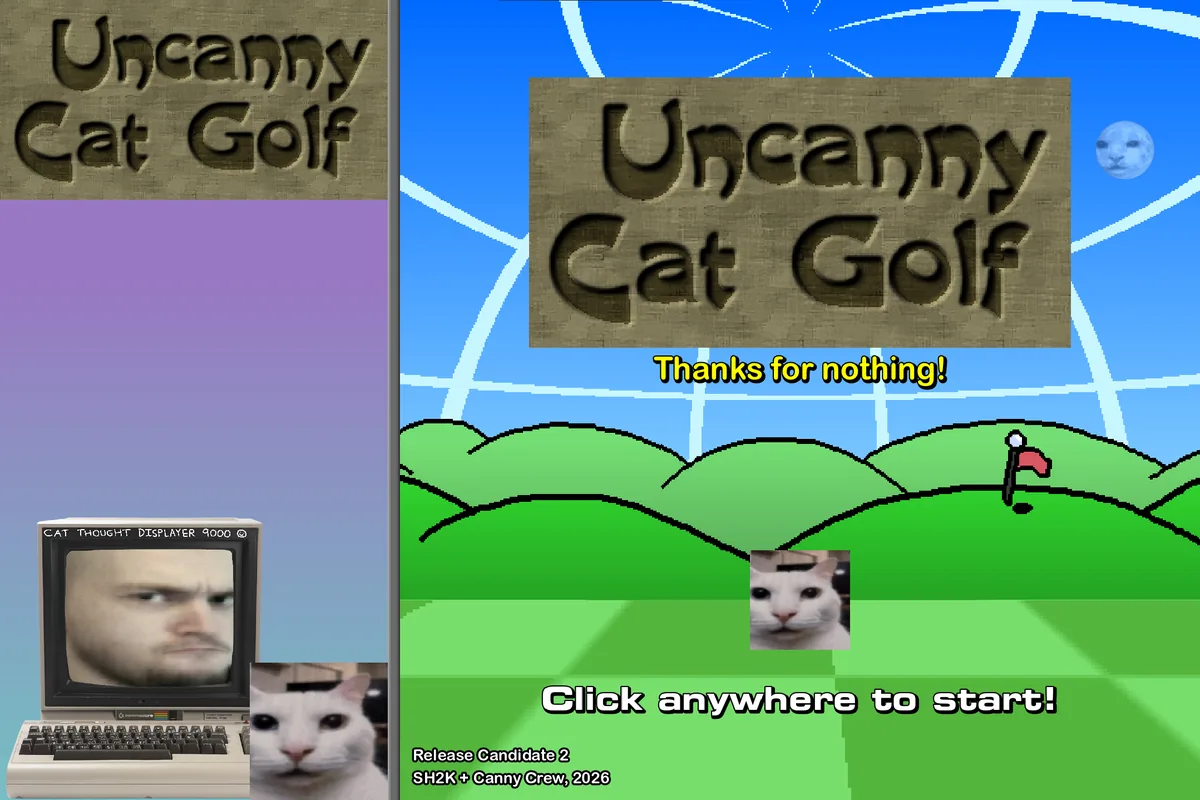
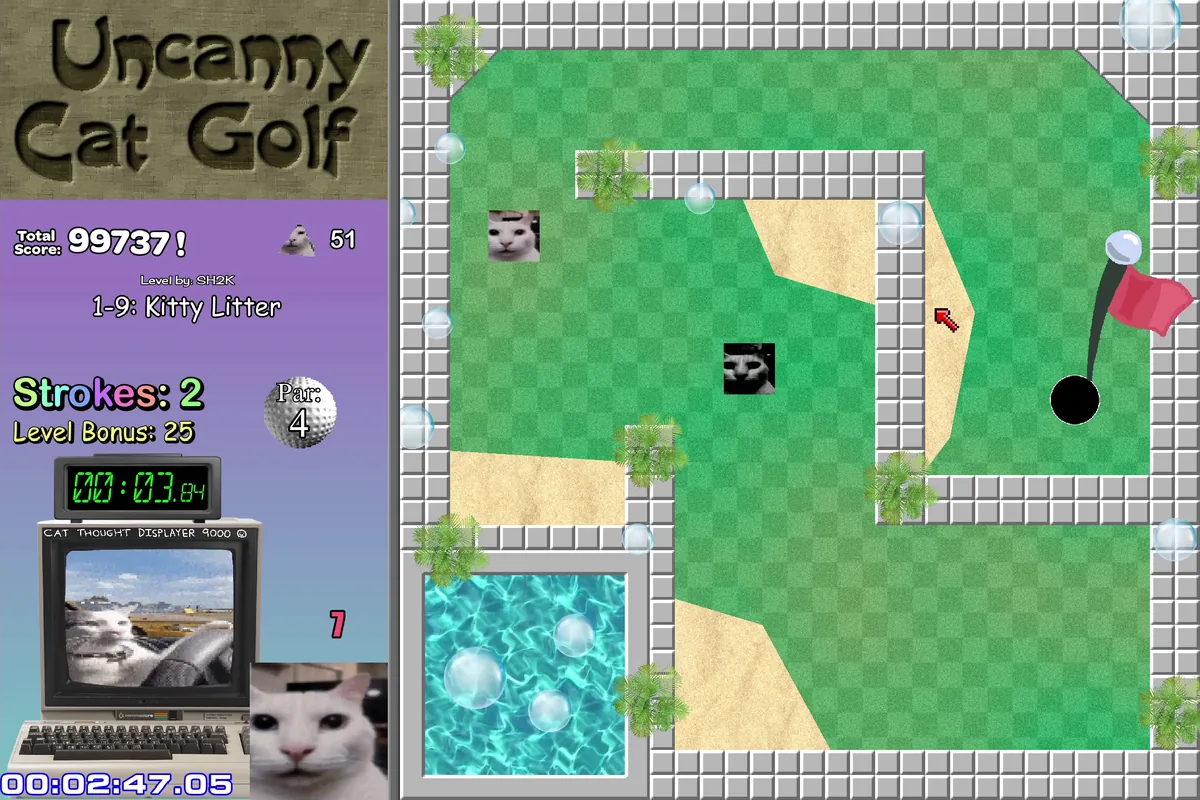
Uncanny Cat Golf angle creates the route screenshot

Angle Creates the Route

Uncanny Cat Golf uses bright top-down fairways filled with narrow walls, moving props, smiling hazards, computer imagery, water, sand, and meme-like visual interruptions to explore reading a complete line before power turns a small directional error into a distant miss. Its square cat and impossible collage make the round look unstable, yet the surfaces that control movement remain readable. Direction, force, momentum, contact, and final position still explain every stroke. A player who identifies the cup, walls, hazards, and open ground before studying the joke can create order without flattening the game's uncanny personality. The fairway becomes a diagram hidden inside an image that would rather be treated as a distraction.

The practical challenge is reading the lane, setting angle and force, planning bank shots, avoiding sand and water, and building a reliable approach to the cup. Before shooting, choose a destination large enough to forgive a small error and useful enough to support the next attempt. Maximum power is rarely the default answer because speed makes tiny aiming mistakes travel farther. The loudest visual joke can distract from the safest line, while excessive power turns simple holes into long recovery sequences. A controlled setup stroke can therefore be more efficient than a dramatic shortcut, especially when water, sand, or a hard corner turns one miss into several recovery shots.

For replay, revisit one high-stroke hole and change only the opening angle or power level before comparing the result while preserving every part of the route that already worked. Compare the intended and actual stopping positions, then classify the difference as angle, power, rebound, obstacle contact, or poor target choice. Par becomes a trail of evidence rather than a verdict. This False Sun treatment focuses on deceptive appearances: the loudest object is not always mechanically important, and the safest line often becomes visible only after attention stops following the brightest interruption.
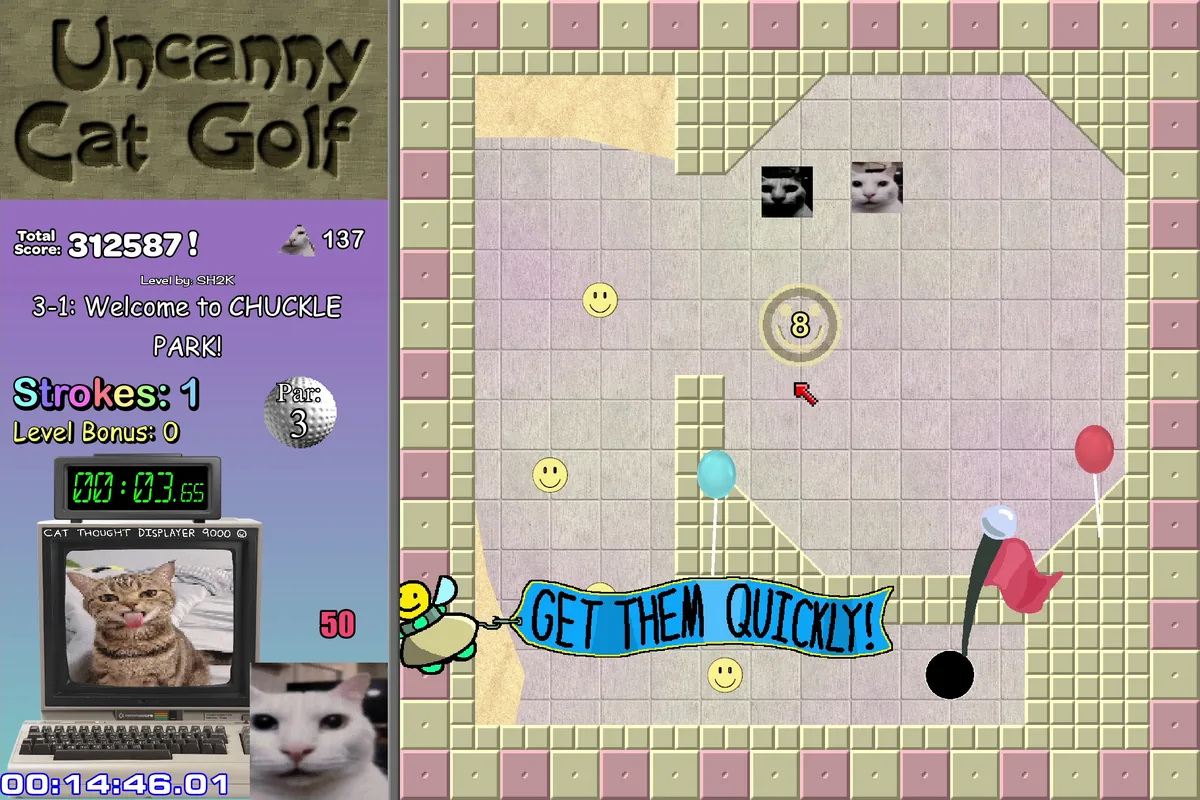
Uncanny Cat Golf force determines the ending position screenshot

Force Determines the Ending Position

Uncanny Cat Golf uses bright top-down fairways filled with narrow walls, moving props, smiling hazards, computer imagery, water, sand, and meme-like visual interruptions to explore using controlled speed to preserve a useful next stroke instead of chasing spectacle. Its square cat and impossible collage make the round look unstable, yet the surfaces that control movement remain readable. Direction, force, momentum, contact, and final position still explain every stroke. A player who identifies the cup, walls, hazards, and open ground before studying the joke can create order without flattening the game's uncanny personality. The fairway becomes a diagram hidden inside an image that would rather be treated as a distraction.

The practical challenge is reading the lane, setting angle and force, planning bank shots, avoiding sand and water, and building a reliable approach to the cup. Before shooting, choose a destination large enough to forgive a small error and useful enough to support the next attempt. Maximum power is rarely the default answer because speed makes tiny aiming mistakes travel farther. The loudest visual joke can distract from the safest line, while excessive power turns simple holes into long recovery sequences. A controlled setup stroke can therefore be more efficient than a dramatic shortcut, especially when water, sand, or a hard corner turns one miss into several recovery shots.

For replay, revisit one high-stroke hole and change only the opening angle or power level before comparing the result while preserving every part of the route that already worked. Compare the intended and actual stopping positions, then classify the difference as angle, power, rebound, obstacle contact, or poor target choice. Par becomes a trail of evidence rather than a verdict. This False Sun treatment focuses on deceptive appearances: the loudest object is not always mechanically important, and the safest line often becomes visible only after attention stops following the brightest interruption.
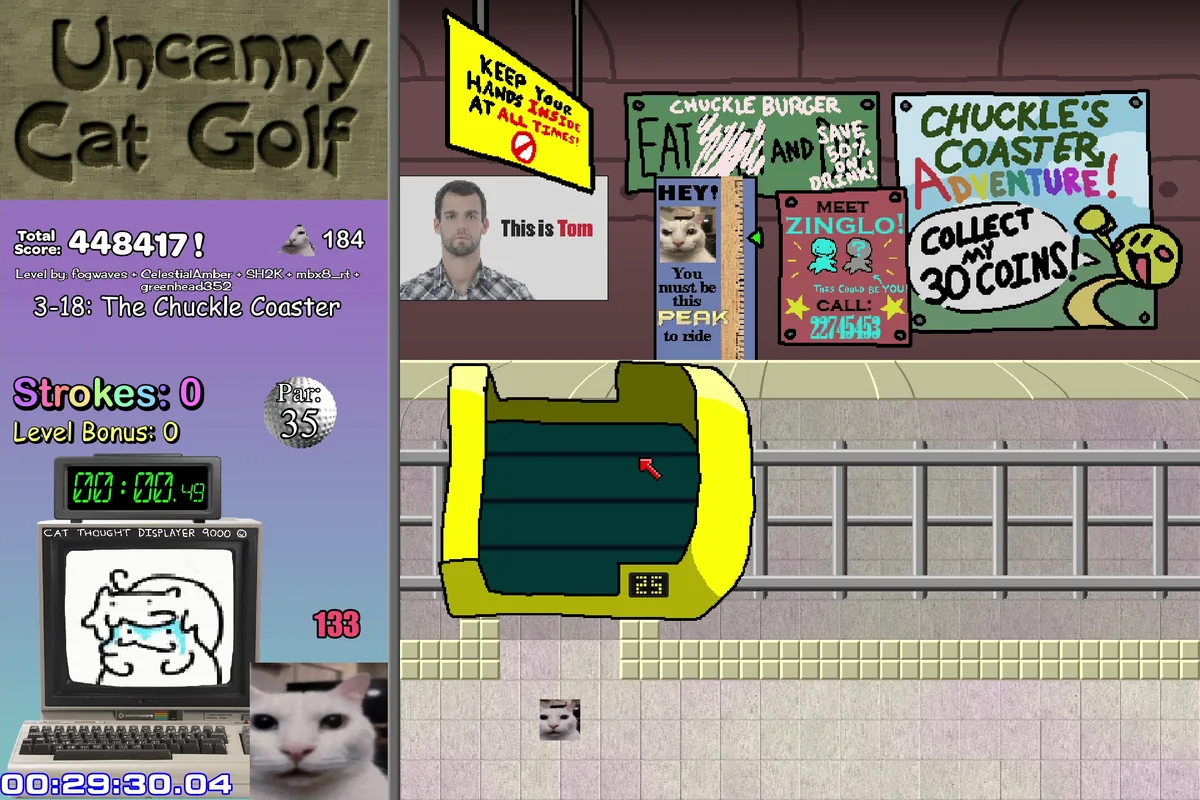
Uncanny Cat Golf walls can reveal hidden paths screenshot

Walls Can Reveal Hidden Paths

Uncanny Cat Golf uses bright top-down fairways filled with narrow walls, moving props, smiling hazards, computer imagery, water, sand, and meme-like visual interruptions to explore planning broad bank shots when water, corners, or barriers block the direct approach. Its square cat and impossible collage make the round look unstable, yet the surfaces that control movement remain readable. Direction, force, momentum, contact, and final position still explain every stroke. A player who identifies the cup, walls, hazards, and open ground before studying the joke can create order without flattening the game's uncanny personality. The fairway becomes a diagram hidden inside an image that would rather be treated as a distraction.

The practical challenge is reading the lane, setting angle and force, planning bank shots, avoiding sand and water, and building a reliable approach to the cup. Before shooting, choose a destination large enough to forgive a small error and useful enough to support the next attempt. Maximum power is rarely the default answer because speed makes tiny aiming mistakes travel farther. The loudest visual joke can distract from the safest line, while excessive power turns simple holes into long recovery sequences. A controlled setup stroke can therefore be more efficient than a dramatic shortcut, especially when water, sand, or a hard corner turns one miss into several recovery shots.

For replay, revisit one high-stroke hole and change only the opening angle or power level before comparing the result while preserving every part of the route that already worked. Compare the intended and actual stopping positions, then classify the difference as angle, power, rebound, obstacle contact, or poor target choice. Par becomes a trail of evidence rather than a verdict. This False Sun treatment focuses on deceptive appearances: the loudest object is not always mechanically important, and the safest line often becomes visible only after attention stops following the brightest interruption.

Uncanny Cat Golf hazards cast long shadows screenshot

Hazards Cast Long Shadows

Uncanny Cat Golf uses bright top-down fairways filled with narrow walls, moving props, smiling hazards, computer imagery, water, sand, and meme-like visual interruptions to explore measuring water, sand, narrow gates, and moving clutter by the recovery strokes they create. Its square cat and impossible collage make the round look unstable, yet the surfaces that control movement remain readable. Direction, force, momentum, contact, and final position still explain every stroke. A player who identifies the cup, walls, hazards, and open ground before studying the joke can create order without flattening the game's uncanny personality. The fairway becomes a diagram hidden inside an image that would rather be treated as a distraction.

The practical challenge is reading the lane, setting angle and force, planning bank shots, avoiding sand and water, and building a reliable approach to the cup. Before shooting, choose a destination large enough to forgive a small error and useful enough to support the next attempt. Maximum power is rarely the default answer because speed makes tiny aiming mistakes travel farther. The loudest visual joke can distract from the safest line, while excessive power turns simple holes into long recovery sequences. A controlled setup stroke can therefore be more efficient than a dramatic shortcut, especially when water, sand, or a hard corner turns one miss into several recovery shots.

For replay, revisit one high-stroke hole and change only the opening angle or power level before comparing the result while preserving every part of the route that already worked. Compare the intended and actual stopping positions, then classify the difference as angle, power, rebound, obstacle contact, or poor target choice. Par becomes a trail of evidence rather than a verdict. This False Sun treatment focuses on deceptive appearances: the loudest object is not always mechanically important, and the safest line often becomes visible only after attention stops following the brightest interruption.

Uncanny Cat Golf par records cause and effect screenshot

Par Records Cause and Effect

Uncanny Cat Golf uses bright top-down fairways filled with narrow walls, moving props, smiling hazards, computer imagery, water, sand, and meme-like visual interruptions to explore using score as evidence about the first weak decision rather than a demand for instant perfection. Its square cat and impossible collage make the round look unstable, yet the surfaces that control movement remain readable. Direction, force, momentum, contact, and final position still explain every stroke. A player who identifies the cup, walls, hazards, and open ground before studying the joke can create order without flattening the game's uncanny personality. The fairway becomes a diagram hidden inside an image that would rather be treated as a distraction.

The practical challenge is reading the lane, setting angle and force, planning bank shots, avoiding sand and water, and building a reliable approach to the cup. Before shooting, choose a destination large enough to forgive a small error and useful enough to support the next attempt. Maximum power is rarely the default answer because speed makes tiny aiming mistakes travel farther. The loudest visual joke can distract from the safest line, while excessive power turns simple holes into long recovery sequences. A controlled setup stroke can therefore be more efficient than a dramatic shortcut, especially when water, sand, or a hard corner turns one miss into several recovery shots.

For replay, revisit one high-stroke hole and change only the opening angle or power level before comparing the result while preserving every part of the route that already worked. Compare the intended and actual stopping positions, then classify the difference as angle, power, rebound, obstacle contact, or poor target choice. Par becomes a trail of evidence rather than a verdict. This False Sun treatment focuses on deceptive appearances: the loudest object is not always mechanically important, and the safest line often becomes visible only after attention stops following the brightest interruption.

Uncanny Cat Golf replay one uncertainty screenshot

Replay One Uncertainty

Uncanny Cat Golf uses bright top-down fairways filled with narrow walls, moving props, smiling hazards, computer imagery, water, sand, and meme-like visual interruptions to explore changing only angle, force, rebound, or target position so each repeat answers a clear question. Its square cat and impossible collage make the round look unstable, yet the surfaces that control movement remain readable. Direction, force, momentum, contact, and final position still explain every stroke. A player who identifies the cup, walls, hazards, and open ground before studying the joke can create order without flattening the game's uncanny personality. The fairway becomes a diagram hidden inside an image that would rather be treated as a distraction.

The practical challenge is reading the lane, setting angle and force, planning bank shots, avoiding sand and water, and building a reliable approach to the cup. Before shooting, choose a destination large enough to forgive a small error and useful enough to support the next attempt. Maximum power is rarely the default answer because speed makes tiny aiming mistakes travel farther. The loudest visual joke can distract from the safest line, while excessive power turns simple holes into long recovery sequences. A controlled setup stroke can therefore be more efficient than a dramatic shortcut, especially when water, sand, or a hard corner turns one miss into several recovery shots.

For replay, revisit one high-stroke hole and change only the opening angle or power level before comparing the result while preserving every part of the route that already worked. Compare the intended and actual stopping positions, then classify the difference as angle, power, rebound, obstacle contact, or poor target choice. Par becomes a trail of evidence rather than a verdict. This False Sun treatment focuses on deceptive appearances: the loudest object is not always mechanically important, and the safest line often becomes visible only after attention stops following the brightest interruption.

Uncanny Cat Golf browser light and player comfort screenshot

Browser Light and Player Comfort

Uncanny Cat Golf uses bright top-down fairways filled with narrow walls, moving props, smiling hazards, computer imagery, water, sand, and meme-like visual interruptions to explore handling iframe loading, focus, fullscreen, mobile precision, storage, sound, and flashing imagery. Its square cat and impossible collage make the round look unstable, yet the surfaces that control movement remain readable. Direction, force, momentum, contact, and final position still explain every stroke. A player who identifies the cup, walls, hazards, and open ground before studying the joke can create order without flattening the game's uncanny personality. The fairway becomes a diagram hidden inside an image that would rather be treated as a distraction.

The practical challenge is reading the lane, setting angle and force, planning bank shots, avoiding sand and water, and building a reliable approach to the cup. Before shooting, choose a destination large enough to forgive a small error and useful enough to support the next attempt. Maximum power is rarely the default answer because speed makes tiny aiming mistakes travel farther. The loudest visual joke can distract from the safest line, while excessive power turns simple holes into long recovery sequences. A controlled setup stroke can therefore be more efficient than a dramatic shortcut, especially when water, sand, or a hard corner turns one miss into several recovery shots.

For replay, revisit one high-stroke hole and change only the opening angle or power level before comparing the result while preserving every part of the route that already worked. Compare the intended and actual stopping positions, then classify the difference as angle, power, rebound, obstacle contact, or poor target choice. Par becomes a trail of evidence rather than a verdict. This False Sun treatment focuses on deceptive appearances: the loudest object is not always mechanically important, and the safest line often becomes visible only after attention stops following the brightest interruption.

Watch Uncanny Cat Golf Videos

Gameplay Video

Watch Uncanny Cat Golf video 1 for additional gameplay context.

Walkthrough Video

Watch Uncanny Cat Golf video 2 for additional gameplay context.

Uncanny Cat Golf FAQ

What is Uncanny Cat Golf?

Uncanny Cat Golf is a playful browser mini-golf game where a square cat replaces the ball and increasingly strange courses hide careful geometry under collage humor.

Can I play Uncanny Cat Golf online?

Yes. Press Play in the game frame to load the browser edition without a separate installation.

How do I aim and shoot?

Use the pointer or trackpad to choose direction and force, then wait for the cat to stop before planning the next stroke.

What is the best beginner strategy?

Read the complete lane, choose generous landing space, and protect the next angle instead of forcing a hole-in-one.

Can walls be used for bank shots?

Yes. Broad flat walls provide predictable rebounds when a direct route is blocked.

How can I lower my score?

Find the first recovery stroke on a difficult hole and change only the earlier angle, power, or target that caused it.

Does it work on mobile?

It may run in a current mobile browser, though landscape orientation and desktop fullscreen improve precision.

Why is the game frame blank?

Wait for remote assets, click inside once, refresh once, and check extensions or networks that block the external host.

Is the imagery graphic?

The supplied artwork is non-graphic. It contains uncanny faces, flashing meme-style images, and deliberately chaotic humor, but the supplied public artwork is non-graphic.