


Browser Horror Game

Play Best Friends for Dinner Online

By Demonward. Approximately 1,000 words / 5 minutes. Implied violence, poisoning, exclusion, and black humor. Unofficial third-party browser build; official release is desktop.

Best Friends for Dinner

Reading preparation checklist

Independent page tool. No game connection or saved progress; resets on refresh.

0 of 4 preparation items checked. Your comfort remains your decision.

Continue to the reading guide

About Best Friends for Dinner

Read the Surface, Question the Expectation

Best Friends for Dinner is a kinetic visual novel by Demonward, built around Donna and the wolf Oz. The supplied description places its length at roughly one thousand words and about five minutes. Those numbers describe a compact reading experience, not a challenge to rush through. Its linear structure means that your main activity is following the presentation rather than selecting a succession of branching answers. Approach it as a short piece of horror fiction whose timing and language deserve attention.

For readers arriving from The False Sun, the useful connection is a willingness to question an inviting surface. That is an editorial comparison, not a claim that these games share a world, developer, or mechanic. A dinner and a friendship can sound reassuring in a title while the content carries something much darker. Give the story room to establish its own tone instead of importing the rules of another horror game.

This companion deliberately avoids revealing an outcome or promising a secret route. There is no verified basis here for describing multiple endings, a friendship score, collectible clues, or a sequence of choices that saves someone. If you want a spoiler-light first reading, start with the warnings and preparation checklist, leave the videos closed, and return to the interpretive sections afterward. Reading carefully is a complete way to engage with a kinetic work.

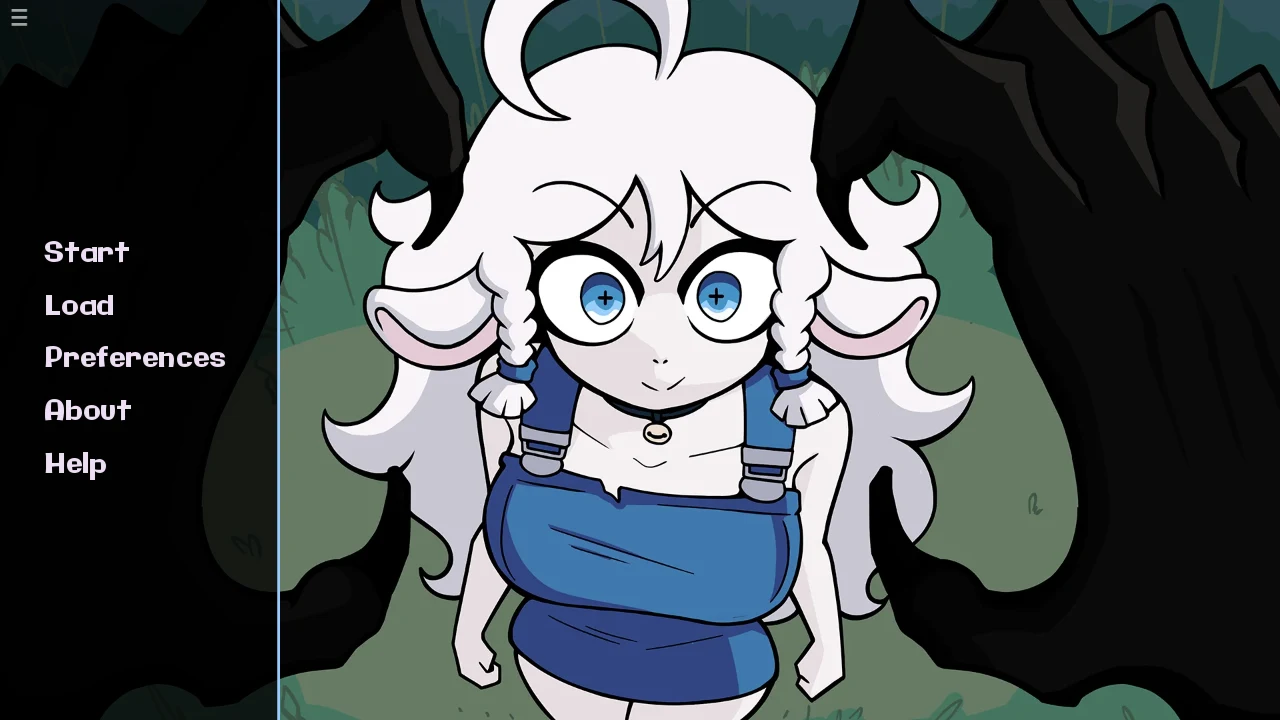
Menu screenshot: Donna stands in a forest wearing a blue dress, with white sheep ears. The left panel lists Start, Load, Preferences, About, and Help. This is the main menu, not a set of story choices.

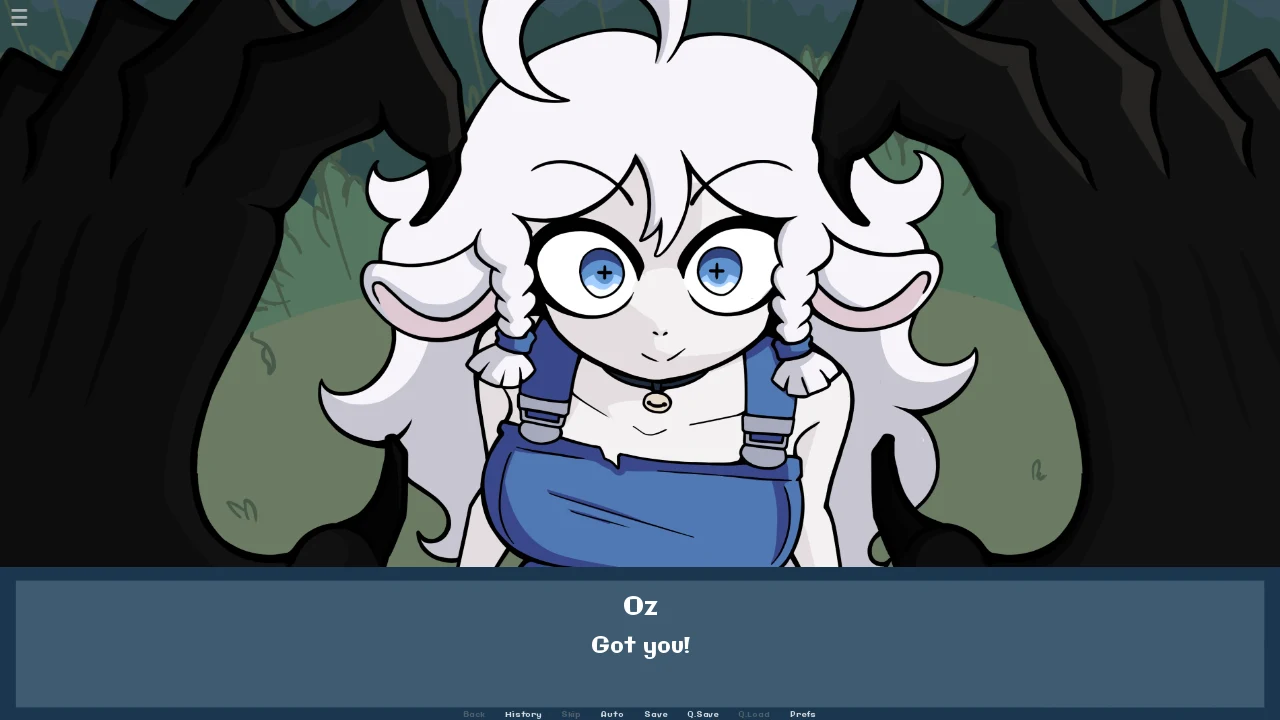
Donna with her mouth closed in the forest; the dialogue box names Oz and reads Got you!

Decide Whether This Dinner Is for You

The themes supplied for this game include implied violence, poisoning, exclusion, and black humor. Implied material can still be distressing, and a brief running time does not guarantee a gentle experience. Consider those subjects before starting the remote player. If a warning touches something you would rather avoid today, leaving the page is a valid decision. No checklist on this site overrides your own comfort or requires you to finish.

Black humor can make a moment feel funny and uncomfortable at the same time. You do not have to settle that tension immediately or treat laughter as approval of a character's conduct. On a first pass, notice the transition between amusement and unease. On a later reading, you can ask how the wording produced that shift. This is an invitation to examine your response, not a prediction about any particular scene.

Poisoning is discussed here only as a fictional content warning and a subject of narrative interpretation. This guide does not offer substances, quantities, preparation methods, or practical instructions. Similarly, implied violence should not be inflated into unsupported claims about explicit imagery. Keep the distinction between what the description confirms and what the actual presentation shows. The optional screenshots and videos may disclose more than the surrounding spoiler-light prose.

Scene screenshot: Donna is the only visible character, standing with her mouth closed in the forest. The dialogue box is labeled Oz and reads 'Got you!'; Oz has no visible character portrait in this image.
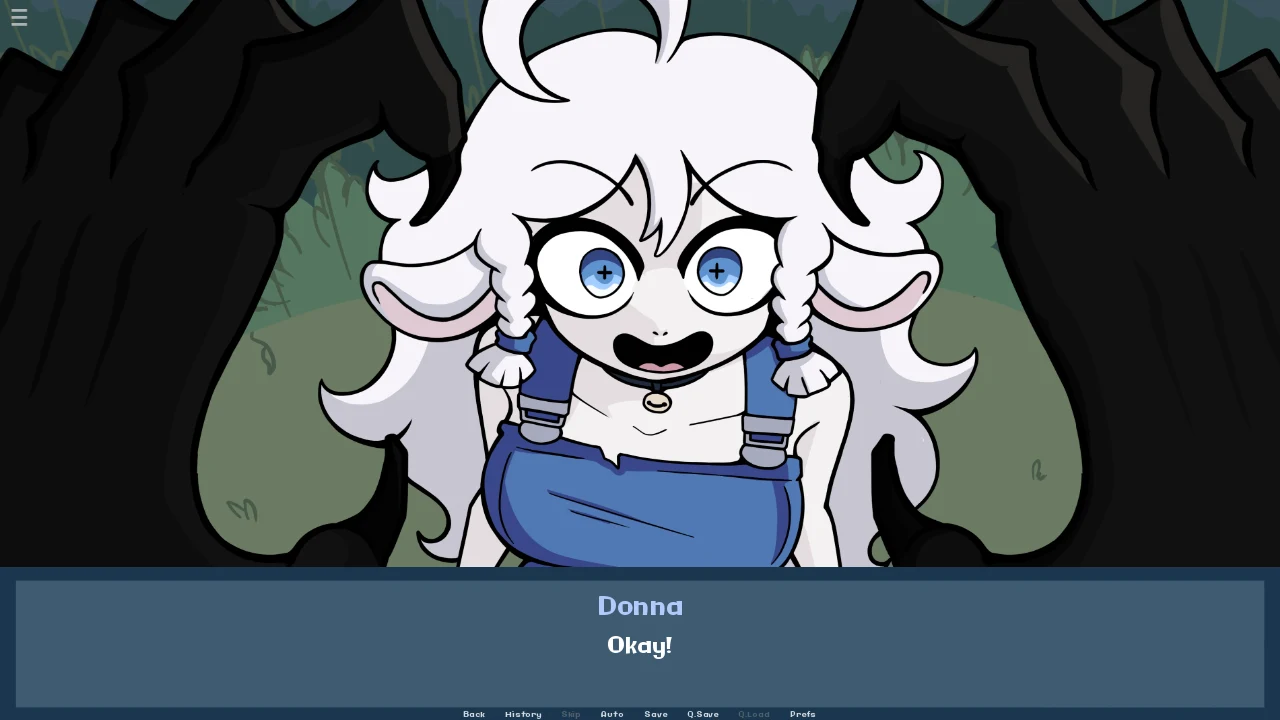
Donna smiles in the forest and says Okay! above the reading toolbar.

Prepare the Player Without Losing the Story

The official release is a desktop version. The player linked on this page is a third-party browser build supplied for embedding, not an official browser edition from Demonward. These are separate facts. Availability inside a frame does not establish creator endorsement, identical controls, identical content, or reliable saving. We have not verified feature parity or completed a browser playthrough as part of preparing this page.

Before loading, allow a few uninterrupted minutes and check that you can comfortably read the screen. Five minutes is an approximate reading estimate; loading, pausing, and rereading can extend a session. Keep other audio quiet if you want to focus, and adjust device volume before unexpected sound becomes distracting. These are preparation suggestions rather than claims that the game requires sound or supports a particular accessibility setting.

Use the independent checklist below to track readiness for this visit. Its boxes describe your own preparation, not Donna's inventory or Oz's feelings. They do not communicate with the embedded game, unlock scenes, store a save file, or persist after a refresh. The progress message only counts marked items. You can uncheck anything at any time, including after loading the player, without changing the story.

Scene screenshot: Donna smiles in the same forest, and her dialogue reads 'Okay!' The bottom toolbar shows Back, History, Skip, Auto, Save, Q.Save, Q.Load, and Prefs. These are reading controls, not branching dialogue choices; their presence does not verify saving or loading.

Donna with her mouth closed in the forest; the dialogue box names Oz and reads Got you!

Look at Donna and Oz Without Inventing Motives

Donna and Oz give the reader two named points of attention, with Oz identified as a wolf. Beyond those supplied facts, avoid deciding in advance that one character must occupy a familiar fairy-tale role. An animal identity can bring associations with danger or appetite, but associations are not evidence of an event. Let the actual dialogue and presentation determine which expectations the story uses, complicates, or leaves untouched.

One useful reading habit is to separate description from inference. Write down a brief neutral observation before adding an interpretation. For example, the fact that someone says something friendly does not automatically establish trustworthiness, and a threatening impression does not prove a hidden action. This approach is especially helpful in a compact story, where a small amount of language may carry much of the emotional weight.

The scene images placed throughout this guide are references for the game rather than diagrams of a solution. They are not labeled with invented chapter names, secret conditions, or alleged ending requirements. If you view them before playing, accept that visual information can shape expectations. If preserving surprise matters more, move directly to the player and return to the images once you have formed an impression of your own.

Scene screenshot: Donna is the only visible character, standing with her mouth closed in the forest. The dialogue box is labeled Oz and reads 'Got you!'; Oz has no visible character portrait in this image.

Donna smiles in the forest and says Okay! above the reading toolbar.

Read Exclusion as a Relationship, Not a Score

Exclusion is one of the confirmed themes, and it offers a productive question for close reading: what does belonging appear to require? You can consider who seems included in a social arrangement, who is kept outside it, and how the language of friendship changes your reaction. These are questions to take to the text, not a claim that the game includes a selectable invitation list or a social simulation.

Be careful not to turn every sentence into evidence for a hidden meter. In a linear kinetic visual novel, the reader's interpretation may change while the sequence itself remains fixed. That difference can be powerful. You might understand an early remark differently after completing the piece, even though you never had an opportunity to alter it. A changed reading is meaningful without being a newly unlocked route.

For a short reflection, choose one idea rather than summarizing everything. You could consider whether the word friendship feels reassuring, demanding, or ambiguous after reading. Support the thought with a concise paraphrase of a moment you actually encountered, and acknowledge uncertainty where appropriate. Do not circulate large blocks of the game's text as a substitute for the work. A focused personal response usually communicates more than a copied transcript.

Scene screenshot: Donna smiles in the same forest, and her dialogue reads 'Okay!' The bottom toolbar shows Back, History, Skip, Auto, Save, Q.Save, Q.Load, and Prefs. These are reading controls, not branching dialogue choices; their presence does not verify saving or loading.

Donna with her mouth closed in the forest; the dialogue box names Oz and reads Got you!

Give the Pacing a Fair First Pass

A story of approximately one thousand words leaves little room for a long tutorial or repeated exposition. Let each new screen settle before advancing again. If the build presents text progressively, wait long enough to distinguish revealing the current sentence from moving to the next one. This is general visual-novel advice, not confirmation of an exact input mapping for this third-party build. Follow the controls actually shown in its interface.

Avoid testing multiple keys rapidly when the player first appears. Accidental advancement can create the impression that something is missing when it has simply passed too quickly to read. If an on-screen history or back function is available, inspect it before relying on it. This guide does not promise that either exists. When no review control is available, starting again may be simpler than trying to reconstruct an uncertain sentence.

A second reading can focus on rhythm rather than discovery. Notice where you slowed down, where a phrase changed the tone, and where your expectations were doing more work than the visible evidence. None of these observations requires an alternate ending. Repetition is useful because you bring different knowledge to the same sequence, not because the page has secretly changed the game's structure or added a branching system.

Scene screenshot: Donna is the only visible character, standing with her mouth closed in the forest. The dialogue box is labeled Oz and reads 'Got you!'; Oz has no visible character portrait in this image.

Donna smiles in the forest and says Okay! above the reading toolbar.

When the Browser Build Does Not Respond

If the frame stays blank, give it a reasonable loading interval before acting. Check whether the rest of the page is responsive and whether your connection is working. A remote host, a browser restriction, or a temporary delivery failure can affect an embedded build independently of the guide. Do not interpret a loading problem as a story event, a locked route, or an instruction to keep clicking.

After reading any visible error, a single reload may be a reasonable test, but assume that unsaved progress could be lost. There is no verified persistence guarantee for this browser version. If you use a direct game link to distinguish an embedding problem from a host problem, remember that it reaches the same third-party build and does not become official simply because it occupies its own tab.

On a phone, evaluate readability before committing to a full session. Rotating the device can provide more horizontal room, but does not prove that every game control supports touch. The surrounding page and the embedded application are different interfaces. A responsive guide cannot repair an inaccessible game menu. If text or controls remain unusable, stop and consider the official desktop release rather than forcing an uncomfortable session.

Scene screenshot: Donna smiles in the same forest, and her dialogue reads 'Okay!' The bottom toolbar shows Back, History, Skip, Auto, Save, Q.Save, Q.Load, and Prefs. These are reading controls, not branching dialogue choices; their presence does not verify saving or loading.

Donna with her mouth closed in the forest; the dialogue box names Oz and reads Got you!

Videos, Credits, and a Useful Final Note

Two supplied YouTube videos are available as optional references. Their presence is not a claim that they are official trailers, complete walkthroughs, or demonstrations of this exact browser build. They can reveal story material. For an unspoiled first experience, postpone playback; for troubleshooting, compare only what is visible and avoid assuming that a different menu proves that your version has a particular undocumented feature.

Credit the original work to Demonward when discussing it. Keep that authorship separate from the hosting of the third-party browser conversion and from this site's editorial guide. We do not describe the embedded copy as the creator's web release. If you encounter a discrepancy between this page and the work, note the platform, the visible behavior, and the specific statement rather than guessing at a cause.

After reading, a useful final note can be very small: one thing the story made you expect, one observation that changed your response, and one question you still have. Keep outcome details behind a spoiler warning when sharing with others. You do not need to invent a definitive explanation or an unseen continuation. A brief kinetic novel can leave a strong impression precisely because its limits invite thoughtful attention rather than exhaustive completion hunting.

Scene screenshot: Donna is the only visible character, standing with her mouth closed in the forest. The dialogue box is labeled Oz and reads 'Got you!'; Oz has no visible character portrait in this image.

Watch Best Friends for Dinner Videos

Best Friends for Dinner video 1

Optional supplied reference; may contain spoilers. Not verified as an official trailer.

Best Friends for Dinner video 2

Optional supplied reference; may contain spoilers. Not verified as an official trailer.

Best Friends for Dinner FAQ

Who created Best Friends for Dinner?

Demonward created the original visual novel.

Is this a branching visual novel?

No. It is a linear kinetic visual novel, not a choice-based route puzzle.

How long is the story?

The supplied description estimates roughly 1,000 words and about five minutes; your reading pace may differ.

Who are the characters?

Donna and the wolf Oz are the named characters.

What content warnings apply?

The known themes include implied violence, poisoning, exclusion, and black humor.

Is the browser build official?

No. The official release is desktop software. This page embeds a user-supplied third-party browser build.

Does the checklist save my game?

No. It only tracks preparation on this page and resets on refresh.

Should I watch the videos first?

Only if you accept potential spoilers. They are optional references, not verified official trailers.